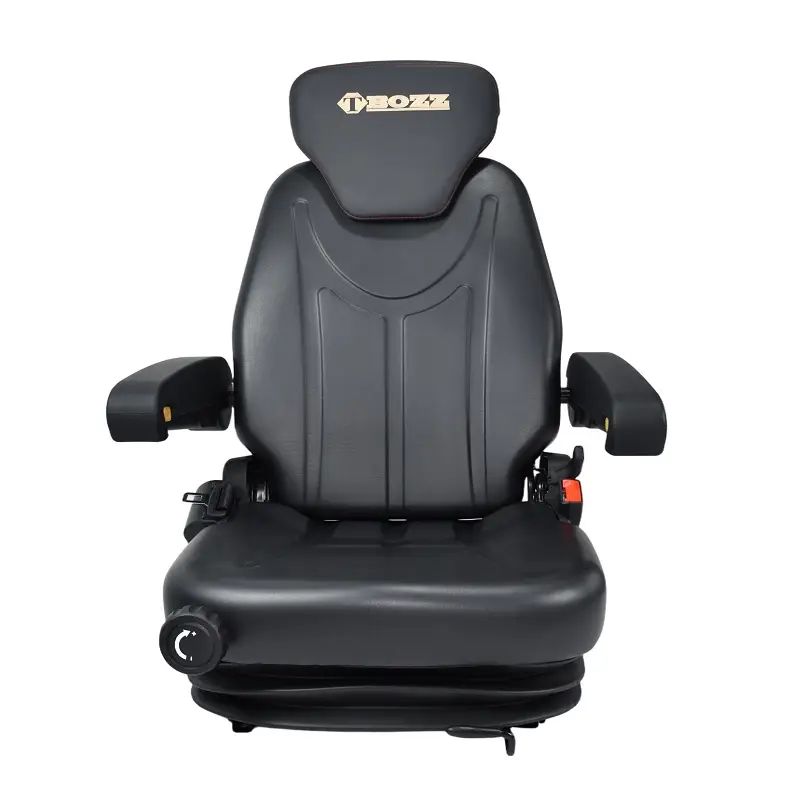
Last week,a veteran excavator operator with eight years on the job called me. He said he’d swapped three seat brands,but his back still hurt – and now his legs were going numb. I asked,”What kind of work do you do mostly? Breaker hammer or loading trucks?” He said mostly breaking pavement around utilities.
I told him:”You need air suspension. And not just any – one with heavy-duty lateral bracing.”
He switched. A week later he called back,sounding like a different person: “If I’d known the difference,I would’ve saved myself two years of pain.”
That’s why I wrote this comparison. As production manager at Source One Seating ,we’ve torn down hundreds of broken seats and talked to countless fleet owners and owner-operators. Mechanical vs air suspension isn‘t just about “more expensive is better.” Choose wrong,and you pay in pain and downtime. Choose right,and your operators stay productive two extra hours a day.
About us:Source One Seating,20+years focused on seats for tractors,forklifts,and excavators. We‘re an OEM supplier to three major domestic equipment manufacturers,and we also serve the aftermarket. 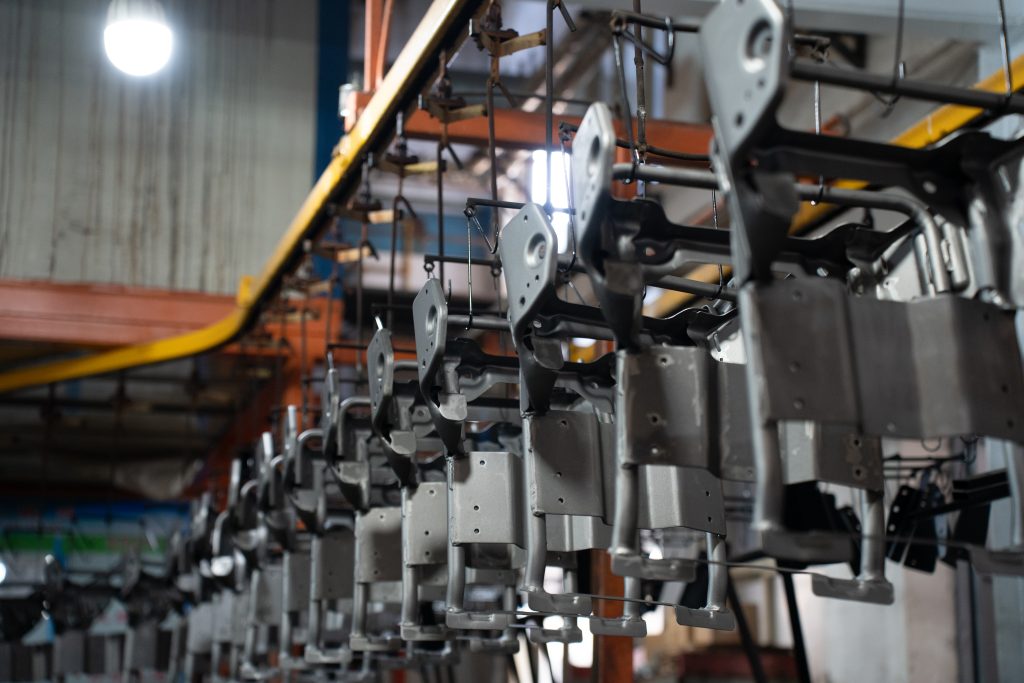
The core difference,plain and simple
- Mechanical suspension– Heavy-duty steel springs + a hydraulic damper. You set the weight dial once,and it stays that way. Tough,cheap,works anywhere.
- Air suspension– A rubber air bag fed by the vehicle’s air system. The pressure auto-adjusts to your weight. From 50kg lb to 100kg,the seat stays at the perfect height. Plush,soaks up buzz,feels like floating.
You might think “air wins,period.” Not so fast. The next section covers the dirty secrets only seat makers know.
Mechanical suspension: tough,dirty,and budget unfriendly
How it works
A high-strength spring (or torsion bar) absorbs impact energy,and a hydraulic damper controls rebound. There’s a large dial on the side – turn it to match your weight,set it once,forget it.
Real world performance on tractors,forklifts,and excavators
Pros
- Extremely durable– No rubber parts. It laughs at mud,dust,gravel,and corrosive environments. In open-pit mines,feed mills,or concrete plants,mechanical seats last twice as long as air suspension.
- Effective for large,low frequency bumps– Like crossing a field furrow in a tractor,or driving an excavator over rocky access roads.
- Low cost– Purchase price is roughly 50-60% of an air seat.
Cons (often overlooked)
- Poor at filtering high frequency vibration– Engine idling “buzz,” forklift chatter over concrete joints,hydraulic pump whine – all of that travels straight to your lower back and neck.
- Only works if you adjust it correctly– In our service bay,we see over half of drivers never bother to turn the dial. A 130 lb driver sitting on a seat set for 180 lb is basically on a wooden bench.

Air suspension: better for your back,but with two weak spots
How it works
A rubber air bag sits under the seat,fed from the vehicle’s compressed air system. A small valve and leveling system maintain a preset ride height – regardless of operator weight. Stand up,it vents air. Sit down,it fills automatically.
Real world performance
Pros
- Excellent high frequency vibration isolation– Engine rumble,hydraulic chatter,uneven warehouse floors – the air bag eats them up. Most drivers describe it as “floating.”
- Auto adjusts for different operators– No dials,no training. Fleet managers love this.
- Reduces risk of occupational back injury– European studies show air suspension can cut whole body vibration (WBV) exposure by more than 50%,significantly lowering spinal damage risk.
Cons (from our warranty return data)
- Rubber bags hate sharp objects– A single rock chip on a job site can puncture the bellows. Once it leaks,the seat collapses to its lowest position – worse than a mechanical seat.
- Air system must be clean– If your vehicle’s air supply has oil,water,or debris,the valve will stick. This is a major issue when retrofitting air seats onto older,poorly maintained machines.
 Side by side comparison: at a glance
 Side by side comparison: at a glance
| Feature | Mechanical Suspension | Air Suspension |
| Core tech | Steel spring + hydraulic damper | Rubber air bag + valve + damper |
| Weight adjustment | Manual dial – set per operator | Automatic – works for any weight |
| Large bump handling (speed bumps,furrows) | Excellent | Excellent |
| High frequency vibe (engine,floor joints) | Poor – transmits harshness | Excellent – floating feel |
| Durability in extreme dirt/dust/rocks | Very high – almost unkillable | Medium – bag and valve are vulnerable |
| Repair cost | Low (spring) | Higher (bag+valve ) |
| Best for… | <4 hrs/day,harsh environment,tight budget | 8+ hrs/day,clean site or cab,health focus |
One simple analogy to remember
- Mechanical seat= A truck’s leaf spring rear suspension. It hauls heavy loads and survives rough roads,but you feel every expansion joint with a “thud.”
- Air seat= The air suspension on a luxury coach or Mercedes S Class. Floats over potholes,isolates you from road chatter.
Don‘t overthink it – use this 30 second decision tree
- Drive>5 hours/day?
- ├─ No → Extremely dusty/muddy environment?
- │ ├─ Yes → Mechanical
- │ └─ No → Either is fine (depends on budget)
- └─ Yes → Vehicle has clean,dry air supply?
- ├─ No → Mechanical (or fix the air system first)
- └─ Yes → Air suspension (strongly recommended)
Why buy from us?
- OEM experience– We supply three major domestic equipment brands. We know the mounting hole patterns,wiring interfaces,and weight calibration. Bolt on replacement,no cutting or welding.
- Free sizing & fitment help– Send us your machine make,model,year,daily operating hours,and main application. Our engineers will reply within 24 hours with the exact model number.
- In stock ready to ship– 90% of common models ship same or next day.