In heavy-duty industrial seating systems, material selection directly influences operator comfort, durability, and long-term performance, and Source One is a specialized manufacturer of industrial seating solutions integrating structural engineering, foam technology, and OEM customization for global equipment applications.
Understanding Foam Materials in Industrial Seat Engineering
Foam is one of the most important functional components in industrial operator seats, responsible for cushioning, vibration absorption, and ergonomic support. In heavy machinery environments such as forklifts, loaders, and agricultural vehicles, operators are exposed to continuous vibration, long working hours, and repetitive motion. As a result, foam performance directly affects fatigue levels and operational safety.
Two of the most commonly used foam types in industrial seating are high-density foam and standard foam. While both serve cushioning purposes, they differ significantly in structural composition, durability, and long-term performance under mechanical stress. Understanding these differences is essential for OEM buyers and equipment manufacturers when selecting seating systems.
Material Composition and Structural Density Differences
High-density foam is engineered with a tighter cellular structure, meaning it contains more material per unit volume. This increased density allows the foam to maintain structural integrity under prolonged pressure, reducing the risk of permanent deformation. In contrast, standard foam has a more open and less compact structure, which provides initial softness but tends to compress more quickly over time.
From a performance perspective, density directly impacts how weight is distributed across the seating surface. High-density foam provides consistent support and reduces localized pressure points, which is critical for operators working long shifts in heavy-duty environments. Standard foam, while more cost-effective, may lose its shape faster under continuous load, leading to uneven seating surfaces and reduced comfort. At Source One, we integrate foam selection into our engineering process, ensuring that each seat configuration matches the operational demands of the target machinery application.
Durability and Compression Resistance Performance
One of the most significant differences between high-density and standard foam lies in compression resistance. Industrial seats are subjected to repeated compression cycles as operators enter, exit, and remain seated during equipment operation. Over time, lower-quality foam materials may fail to recover their original shape, leading to permanent deformation.
High-density foam exhibits superior compression recovery properties, meaning it can withstand thousands of load cycles while maintaining structural consistency. This makes it particularly suitable for heavy-duty applications where long-term durability is a priority. Standard foam, on the other hand, tends to degrade more quickly under repeated stress, resulting in reduced lifespan and increased maintenance frequency. For OEM manufacturers, this difference has direct cost implications, as foam degradation often leads to earlier seat replacement and higher lifecycle expenses.
Vibration Absorption and Operator Comfort Differences
In industrial environments, vibration is one of the primary contributors to operator fatigue. Forklifts and heavy machinery generate continuous low-frequency vibrations that travel through the seat structure and affect the operator’s body. Foam materials play a key role in reducing this impact.
High-density foam provides more controlled vibration due to its compact structure, which helps distribute energy more evenly across the seat surface. This reduces peak pressure points and minimizes the transmission of vibration to the operator. Standard foam, while softer initially, may allow more vibration penetration due to its lower structural resistance. When combined with mechanical suspension systems, high-density foam significantly enhances overall ride comfort. However, it must be carefully engineered to avoid excessive rigidity, which could reduce perceived softness. This balance is critical in industrial seat design.
Heat Resistance and Environmental Stability
Industrial seats are often exposed to varying environmental conditions, including high temperatures, humidity, and dust. Foam materials must therefore maintain consistent performance under different climatic conditions. High-density foam typically offers better thermal stability, maintaining its structural properties across a wider temperature range.
Standard foam may be more susceptible to temperature-induced changes, becoming softer in heat and stiffer in cold conditions. These variations can affect comfort consistency and long-term usability, particularly in outdoor machinery applications. In global OEM supply chains, environmental stability is a key factor when selecting foam materials for industrial seating systems.
Cost Efficiency and Suitability
From a cost perspective, standard foam is generally more economical, making it suitable for light-duty or short-duration applications. However, in heavy-duty environments where equipment operates continuously for long hours, the lower initial cost may be offset by shorter lifespan and higher replacement frequency.
High-density foam, while more expensive, provides better long-term value due to its durability and reduced maintenance requirements. It is commonly used in premium industrial seating systems where performance consistency is critical. OEM buyers often evaluate foam selection based on total lifecycle cost rather than initial purchase price, especially in large-scale fleet operations.
Integration with Seat Structure and Suspension Systems
Foam performance cannot be evaluated in isolation, as it works in conjunction with seat frames and suspension systems. In industrial seating design, foam acts as a secondary energy absorber that complements mechanical suspension systems.
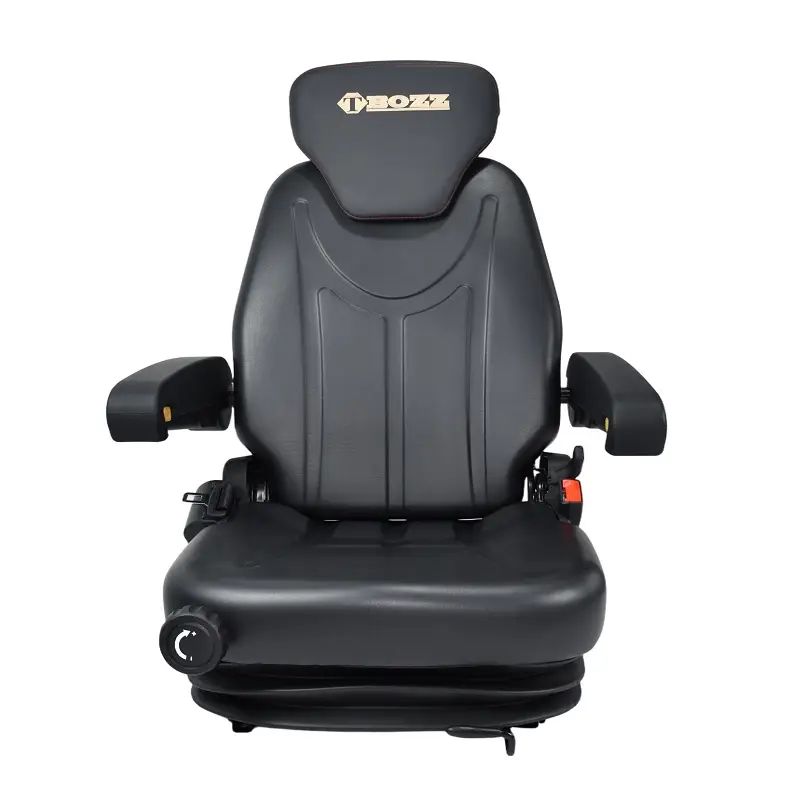
In advanced configurations, such as a replacement forklift seat, high-density foam is often used to enhance structural support while maintaining ergonomic balance. The interaction between foam layers and suspension mechanisms determines overall seating comfort and vibration control efficiency. Source One applies integrated engineering principles to ensure foam materials are properly matched with frame structures and suspension systems, optimizing both comfort and durability.
Maintenance and Long-Term Performance Considerations
Maintenance requirements also differ between foam types. High-density foam generally requires less frequent replacement due to its superior structural stability. Standard foam, while easier to produce and replace, may require more frequent maintenance cycles in demanding environments. Over time, foam degradation can lead to uneven seating surfaces, reduced ergonomic support, and increased operator fatigue. Therefore, selecting the appropriate foam type is essential for maintaining long-term equipment efficiency and operator well-being.
Conclusion: Foam Selection as a Strategic Engineering Decision
The choice between high-density foam and standard foam is not simply a material preference but a strategic engineering decision that impacts durability, comfort, and lifecycle cost in industrial seating systems. High-density foam offers superior compression resistance, vibration control, and long-term stability, while standard foam provides cost advantages for lighter applications.
In modern industrial equipment design, foam must be considered as part of an integrated system that includes structural frames and suspension mechanisms. An optimized ergonomic forklift seat must balance all these elements to ensure consistent operator comfort and long-term performance. Through continuous material engineering and system-level design integration, Source One continues to develop industrial seating solutions that meet the evolving demands of global OEM manufacturers and heavy-duty equipment applications.