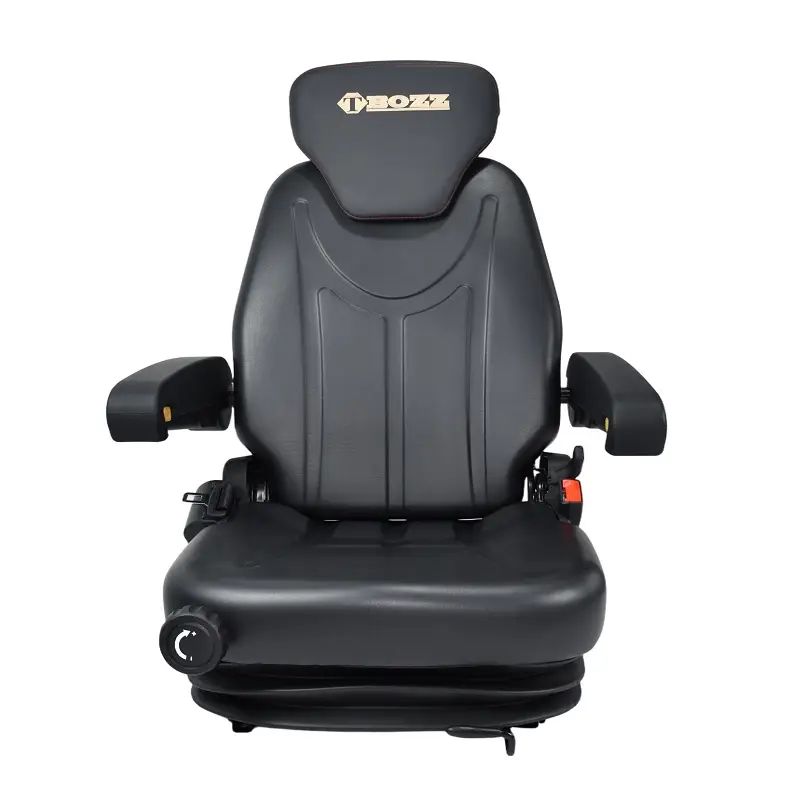
In industrial vehicle engineering, seat durability is closely tied to structural frame design, vibration resistance, and load distribution efficiency, and Source One operates as a specialized manufacturer of industrial seating systems that integrates frame engineering, material processing, and OEM customization to support long-term equipment performance in demanding working environments.
Why Seat Frame Design Is the Foundation of Forklift Seat Lifespan
Industry analysis shows that forklift seat lifespan is not determined only by surface materials or cushioning quality, but primarily by the structural integrity of the seat frame. The frame acts as the load-bearing skeleton of the entire seating system, directly influencing how vibration, operator weight, and mechanical shock are absorbed and distributed during operation. In high-intensity environments such as warehouses, ports, and construction sites, forklifts operate under continuous motion, frequent stops, and uneven surfaces, all of which place repeated stress on the seat structure.
When seat frames are poorly engineered, stress concentration points develop at welding joints and mounting interfaces. Over time, these weak points lead to metal fatigue, deformation, and eventual structural failure. In contrast, optimized frame geometry improves force distribution across the structure, significantly extending operational lifespan and reducing maintenance frequency. For OEM buyers, this translates into lower lifecycle costs and improved equipment uptime.
Material Selection and Structural Load Management
From an engineering perspective, material selection is one of the most critical determinants of seat frame durability. High-strength steel is commonly used in industrial seat frames due to its ability to withstand repeated dynamic loading without permanent deformation. However, material quality alone is not sufficient; the structural design must also ensure proper load transfer paths.
Manufacturers in the industrial seating sector typically use reinforced tubular steel or stamped steel plate structures to achieve a balance between rigidity and weight efficiency. These materials are engineered to absorb vertical vibration while maintaining lateral stability during forklift operation. If the frame is too rigid, vibration is transferred directly to the operator; if it is too flexible, structural fatigue occurs more rapidly. The design challenge lies in achieving an optimal equilibrium between these two factors.
At Source One, we emphasize that material selection is always paired with structural simulation and load testing. This ensures that each frame design is validated under real operating conditions before mass production begins, reducing the risk of premature wear in downstream applications.
Welding Quality and Fatigue Resistance in Frame Construction
Welding quality is another critical factor influencing forklift seat lifespan. Industrial seat frames are exposed to continuous micro-vibrations during operation, which gradually weaken welded joints if they are not properly reinforced. Poor welding quality can lead to crack propagation, especially at high-stress junctions such as mounting brackets and suspension connection points.
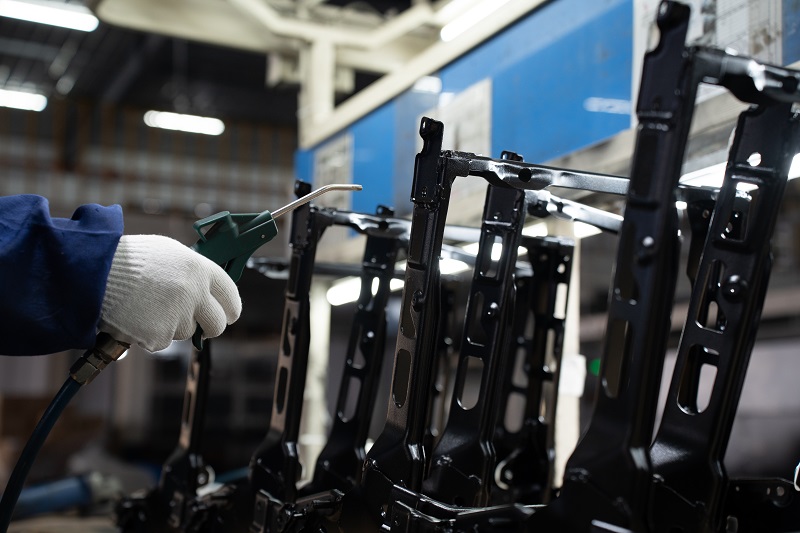
To mitigate this risk, manufacturers apply controlled welding processes and post-weld reinforcement techniques. These include uniform penetration welding, stress-relief treatments, and inspection protocols that detect micro-defects before assembly. The goal is to ensure that all welded joints maintain structural integrity throughout the product lifecycle.
In high-quality production systems, weld consistency is monitored through standardized parameters such as temperature control, welding speed, and filler material composition. These variables directly influence the fatigue resistance of the final structure and therefore play a major role in determining overall seat lifespan.
Vibration Absorption and Frame Geometry Optimization
Forklift operations generate continuous vibration due to uneven terrain, load shifting, and mechanical acceleration. If the seat frame does not effectively manage these forces, vibration energy is transferred directly to structural joints, accelerating wear and reducing lifespan. Therefore, modern seat frame design incorporates vibration distribution pathways that reduce stress concentration.
Engineers often optimize frame geometry by adjusting load-bearing angles, reinforcing key structural nodes, and integrating suspension mounting points that absorb energy before it reaches the main frame. These design improvements significantly reduce long-term deformation and enhance durability under continuous operation.
Industry studies show that optimized vibration control not only extends structural lifespan but also improves operator comfort, which indirectly reduces equipment misuse and further contributes to longer service life.
OEM Customization and Structural Adaptability
Different forklift models require different mounting configurations, load capacities, and ergonomic requirements. As a result, seat frame design must remain adaptable to various OEM specifications without compromising structural integrity. This adaptability is a key factor in evaluating long-term supply reliability.
A high-quality forklift seat must therefore support modular frame design, allowing adjustments in mounting brackets, suspension interfaces, and reinforcement zones. This ensures compatibility across multiple vehicle platforms while maintaining consistent durability standards.
From a manufacturing standpoint, Source One integrates OEM engineering collaboration into early design stages. We work with equipment manufacturers to adjust structural parameters based on operational requirements, ensuring that frame durability aligns with real-world usage conditions rather than theoretical design assumptions.
Surface Treatment and Corrosion Resistance in Frame Longevity
In addition to structural design, surface treatment plays a significant role in extending seat frame lifespan. Industrial forklifts often operate in environments exposed to moisture, dust, and chemical agents, all of which can accelerate corrosion. If untreated, corrosion weakens structural integrity and leads to premature failure.
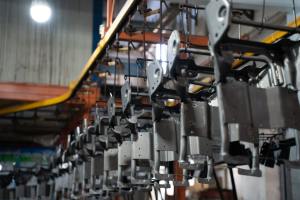
To address this issue, manufacturers apply protective coatings such as electrophoretic coating, powder coating, or galvanized finishing. These treatments create a barrier between metal surfaces and environmental exposure, significantly extending the usable lifespan of the frame. Corrosion resistance is particularly important in outdoor or semi-outdoor industrial environments where forklifts operate under variable weather conditions. A well-protected frame maintains structural reliability even after years of continuous use.
Quality Control Systems and Lifecycle Performance Testing
Ensuring long seat frame lifespan requires comprehensive quality control systems that go beyond production inspection. Manufacturers typically conduct lifecycle testing, including vibration simulation, load fatigue testing, and impact resistance evaluation. These tests replicate real-world operating conditions to identify potential failure points before products reach customers.
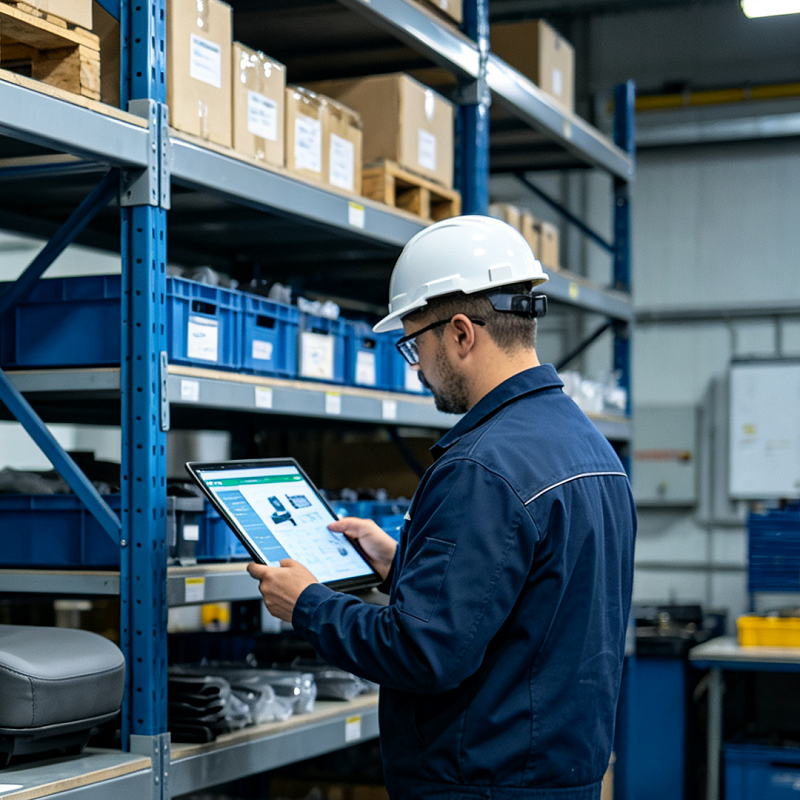
Standardized inspection procedures are implemented at multiple stages of production, including raw material verification, welding inspection, and final assembly validation. This layered approach ensures that every frame meets strict durability requirements before shipment. At Source One, we emphasize that quality control is not a final step but a continuous process integrated into every stage of manufacturing. This ensures consistent product reliability across large-scale OEM production runs.
Conclusion: Structural Engineering as the Key to Forklift Seat Longevity
Forklift seat lifespan is fundamentally determined by the quality of its frame design, including material selection, welding integrity, vibration management, and corrosion resistance. Each of these engineering factors contributes to the overall durability and reliability of the seating system in demanding industrial environments.
As industry requirements continue to evolve, manufacturers must adopt more advanced structural design methodologies and integrated production systems to meet OEM expectations. An optimized ergonomic forklift seat is not only defined by comfort but also by the long-term stability of its frame structure under continuous load conditions.
Through integrated engineering and manufacturing practices, Source One continues to develop industrial seating systems that balance structural strength, ergonomic performance, and lifecycle durability, supporting global OEM customers in achieving higher equipment reliability and operational efficiency.