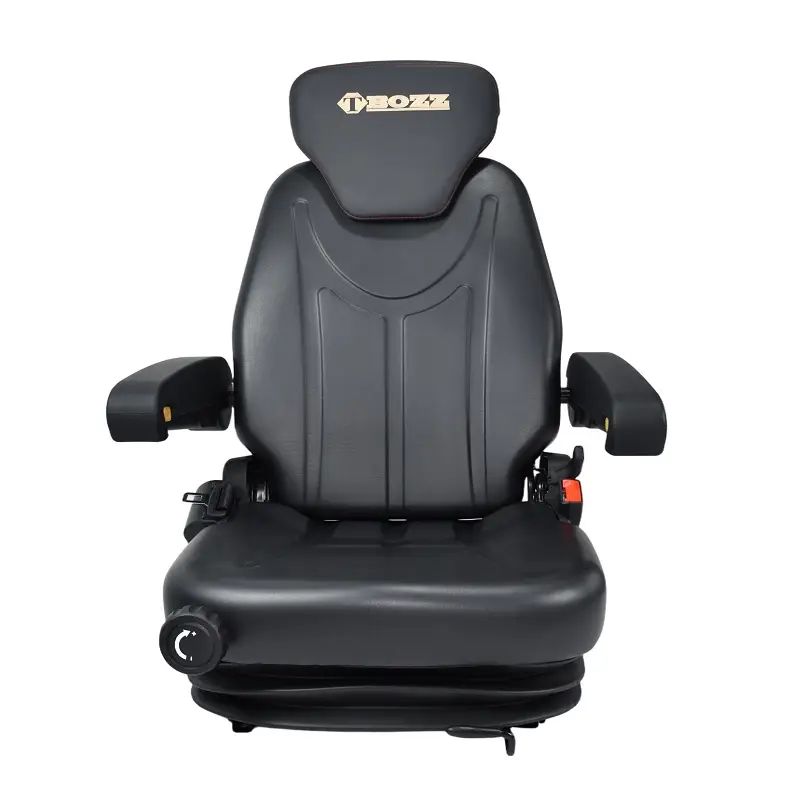
In modern heavy machinery operations, operator comfort and fatigue reduction have become critical performance indicators for seating systems, and Source One is a specialized manufacturer focusing on industrial seating solutions that integrate advanced foam technology, structural engineering, and OEM customization for global equipment markets.
The Role of Foam Technology in Industrial Seat Comfort
Foam technology plays a fundamental role in determining the comfort level, vibration absorption capability, and long-term usability of industrial operator seats. In environments such as construction sites, warehouses, and agricultural fields, operators are exposed to continuous vibration, repetitive motion, and prolonged sitting hours. Without properly engineered foam systems, these conditions can lead to fatigue, reduced productivity, and even long-term musculoskeletal issues.
Modern industrial seating foam is no longer a simple cushioning material; it is an engineered component designed to interact with seat frames, suspension systems, and ergonomic structures. By controlling density, elasticity, and compression recovery rates, manufacturers can significantly improve how the seat responds to dynamic loads during equipment operation.
Foam Density Control and Ergonomic Performance
One of the most important aspects of foam technology is density control. Foam density directly influences how weight is distributed across the seat surface and how pressure points are managed during long operating hours. High-density foam provides better structural support, preventing excessive sinking and maintaining posture alignment, while lower-density foam can improve initial softness but may degrade faster under continuous load.
In industrial applications, engineers must carefully balance these properties to ensure both comfort and durability. Multi-layer foam structures are often used, combining a supportive base layer with a softer top layer to achieve optimized ergonomic performance. This layered approach ensures that vibration energy is absorbed progressively rather than transmitted directly to the operator. From a manufacturing perspective, Source One integrates foam density calibration into its production system to ensure consistent comfort performance across different seat models and OEM requirements.
Vibration Absorption and Energy Dispersion Mechanisms
Foam materials in industrial seats are engineered to function as vibration dampers, reducing the transmission of mechanical energy from the machine to the operator. Forklifts and heavy machinery generate continuous low-frequency vibrations that can cause fatigue and discomfort over extended periods. Foam structures mitigate this effect by dispersing energy across a wider surface area.
Advanced polyurethane foams are designed with open-cell structures that allow controlled air movement within the material. This internal movement helps absorb shock and reduce peak pressure points. When combined with mechanical suspension systems, foam layers significantly enhance overall ride comfort and reduce operator strain. Industry studies show that effective vibration damping not only improves comfort but also contributes to higher operational efficiency, as reduced fatigue leads to better focus and safer machine handling.
Temperature Resistance and Material Stability
Industrial environments often expose operator seats to extreme temperature variations, especially in outdoor or semi-outdoor operations. Foam materials must therefore maintain their elasticity and structural integrity under both high and low temperature conditions. Poor-quality foam may harden in cold environments or become overly soft in high heat, reducing comfort and performance consistency.
High-performance foam systems are engineered with thermal stability additives that ensure consistent behavior across a wide temperature range. This stability is essential for maintaining long-term seating performance in global OEM applications where machinery operates in diverse climates.
Durability and Compression Recovery Performance
Another critical factor in foam technology is compression recovery ability. Industrial operator seats are subjected to repeated compression cycles over long operational periods. If foam fails to recover its original shape efficiently, it leads to permanent deformation, reduced comfort, and uneven weight distribution.
High-quality foam materials are designed to maintain structural resilience even after thousands of compression cycles. This ensures that the seat retains its ergonomic properties over its full-service life. Manufacturers often conduct long-term fatigue testing to simulate real-world usage conditions and validate foam performance before mass production.
Integration with Seat Frame and Suspension Systems
Foam technology does not function independently; it must be integrated with seat frame structures and mechanical suspension systems to achieve optimal performance. The interaction between these components determines how effectively vibration is absorbed and how weight is distributed across the seating system.
In advanced industrial seat designs, foam layers are strategically positioned to complement suspension movement. When the seat frame absorbs mechanical shocks, foam materials further refine the energy distribution, ensuring smoother transitions and reduced peak impact on the operator’s body. This integrated approach is particularly important in heavy machinery applications where operating conditions are highly variable and continuous vibration exposure is unavoidable.
OEM Customization and Application-Specific Foam Design
Different industrial applications require different foam configurations depending on machine type, operating environment, and user requirements. For example, a forklift used in warehouse logistics may prioritize long-duration comfort, while construction machinery seats may require higher durability and vibration resistance.
OEM manufacturers often adjust foam density, thickness, and layering structures to meet specific operational needs. A forklift seat manufacturers must therefore develop flexible foam engineering systems that can adapt to diverse customer requirements without compromising production efficiency. In this context, Source One applies application-based foam customization strategies, ensuring that each seat design aligns with the operational conditions of the target machinery.
Quality Control and Foam Performance Testing
Quality control plays a vital role in ensuring foam consistency and long-term performance. Manufacturers conduct multiple tests including compression set evaluation, rebound resilience testing, and vibration simulation to assess foam behavior under real-world conditions.
These testing processes help identify potential weaknesses in material formulation and ensure that only high-performance foam systems are used in final production. Consistency across production batches is essential for OEM customers who require identical seating performance across large equipment fleets.
Conclusion: Foam Technology as a Core Driver of Operator Comfort
Foam technology has become a central element in industrial seat design, directly influencing comfort, vibration control, durability, and ergonomic performance. By optimizing density, structure, and material composition, manufacturers can significantly enhance operator experience in demanding industrial environments.
In modern OEM applications, foam systems must work in harmony with seat frames and suspension mechanisms to deliver stable and reliable performance over long operational cycles. A well-designed universal forklift seat must therefore integrate advanced foam engineering to ensure consistent comfort and durability across different machine platforms. Through continuous material innovation and integrated engineering systems, Source One continues to develop industrial seating solutions that balance comfort, structural integrity, and long-term performance for global heavy machinery applications.