In off-road and heavy-duty operations, vibration is a constant condition that directly affects operator comfort and long-term equipment usability. At Source One, we design seating systems for harsh working environments where uneven terrain and continuous impact cannot be avoided. Our experience in developing construction machinery seats helps us understand how repeated shocks travel through chassis structures into the operator position. This is also why many fleet managers and engineers evaluate construction equipment seat manufacturers not only by durability but also by how well their seating systems reduce transmitted vibration during daily operation. Shock absorption is not an optional feature; it is part of maintaining stable control, reducing fatigue, and supporting consistent machine handling across long working hours.
Vibration Exposure in Field Conditions
In earthmoving, agriculture-adjacent construction, and material handling tasks, operators often work on surfaces that transmit uneven forces through the machine frame. These forces become more noticeable when speed changes or when attachments engage dense ground materials. Without adequate shock absorption, the operator experiences continuous low-frequency vibration that can affect concentration and control precision. Over time, this exposure also contributes to faster wear on seating components and mounting structures. We address these conditions by combining suspension travel, foam density, and mounting geometry into one integrated system. This approach is commonly evaluated by users who compare construction equipment seat manufacturers during procurement planning for fleet upgrades.
Engineering of Seat Shock Systems
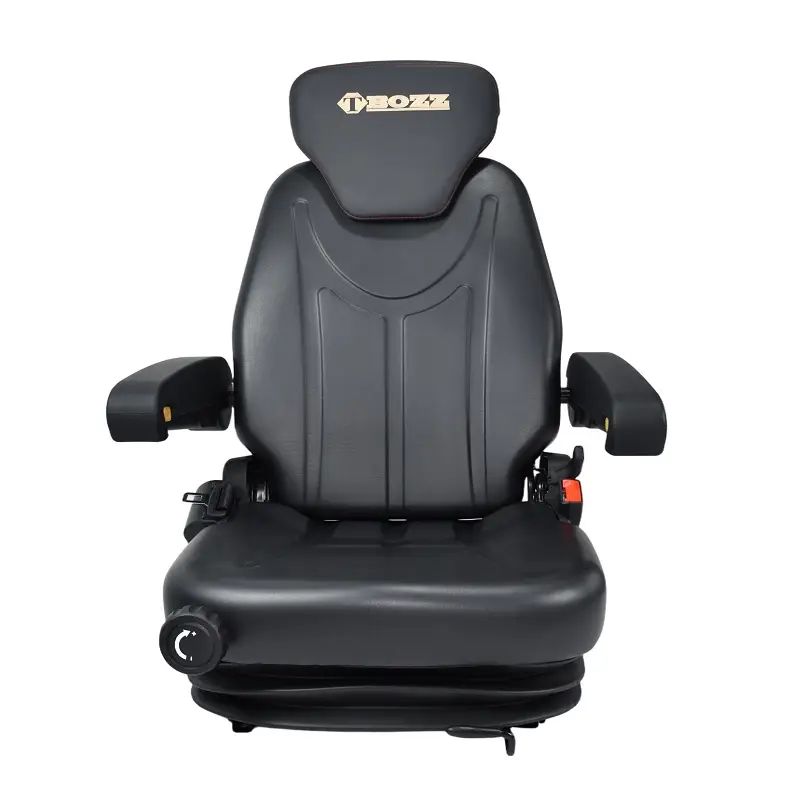
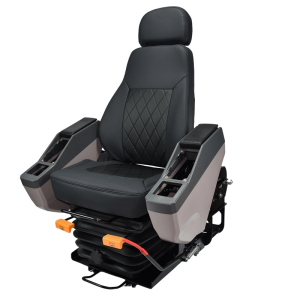
We integrate mechanical suspension and ergonomic shaping to manage vibration at the source of operator contact. Coil-based suspension elements and damper structures are selected according to expected load ranges and terrain severity. Foam layering is tuned to balance firmness with energy dispersion, ensuring that repeated impacts do not concentrate on a single point. In our development work at Source One, we also test real-world seating behavior under extended operating cycles to refine response consistency. A representative example of our engineering direction can be found in our excavator seating solution designed for construction machinery seats, which illustrates how structure and material selection work together in practical field conditions.
Operational Stability and Operator Comfort Balance
We consider shock absorption a structural requirement rather than an optional comfort feature because field feedback consistently shows its influence on control stability and operator endurance. In practical application, our team evaluates seating performance under simulated and real operating cycles to ensure compatibility with heavy-duty environments and varying ground conditions encountered in daily work. We also take into account maintenance requirements so that replacement parts and adjustment mechanisms remain accessible for construction equipment seat manufacturers in field.