In industrial vehicle systems, seat durability is widely regarded as a key engineering parameter that affects operator safety, maintenance cost, and overall equipment lifecycle performance. Industry observers note that durability is no longer defined solely by material strength, but by how well a seating system performs under continuous vibration, long-hour operation, and multi-environment exposure. Within this context, Source One operates in the industrial seating sector as a manufacturer focused on engineered seat systems designed for heavy-duty and long-cycle applications, where structural reliability and ergonomic stability must be balanced.
Industry Interpretation of Seat Durability
From a third-party industry perspective, durability in industrial seats refers to the ability of a seating system to maintain structural integrity, ergonomic function, and operational stability over extended service periods. Unlike consumer seating products, industrial seats are exposed to continuous mechanical stress, frequent vibration cycles, and environmental fluctuations. These conditions require seats to perform consistently under fatigue loading rather than static conditions. Therefore, durability evaluation must consider not only initial strength but also long-term degradation behavior under real operating environments. In practical applications, durability is increasingly treated as a system-level performance indicator combining structure, materials, and vibration management.
Structural Integrity as the Core Evaluation Factor
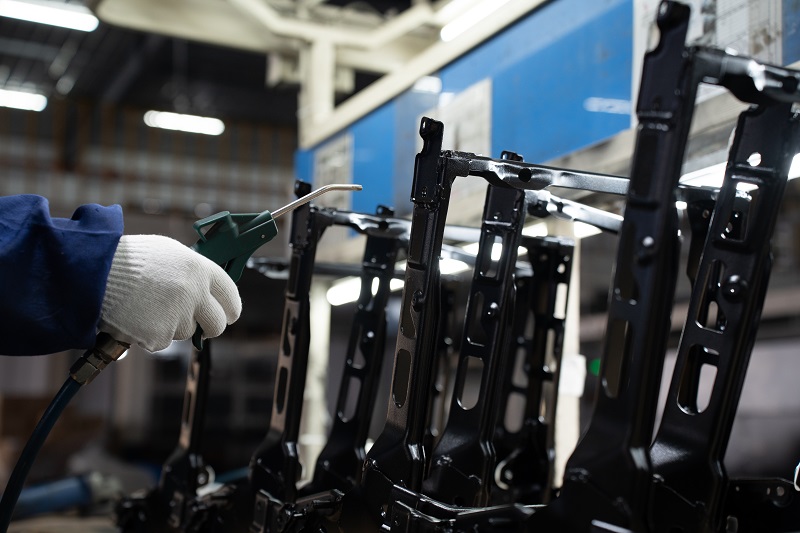
One of the primary indicators of durability is structural integrity. Industrial seats typically rely on reinforced steel frames designed to withstand repeated dynamic loads without deformation or failure. The quality of welding joints, frame geometry, and load distribution design directly affects long-term performance. Poor structural design can lead to stress concentration, which accelerates fatigue damage over time. From a manufacturing standpoint, Source One states that we emphasize reinforced structural engineering in seat design to ensure that frames maintain stability under continuous industrial usage conditions.
Material Fatigue Resistance and Cushioning Performance
Material selection plays a critical role in durability evaluation, particularly in cushioning systems. High-density foam is widely used in industrial seats due to its ability to maintain shape stability under repeated compression cycles. Lower-density foam materials may offer initial softness but tend to degrade faster, leading to uneven surfaces and reduced ergonomic support over time. This degradation directly impacts operator comfort and posture stability. In industry practice, industrial seats are often engineered using multi-layer foam systems to balance comfort and long-term resilience under heavy-duty working conditions.
Suspension System Influence on Service Life
Suspension systems are another critical factor influencing seat durability. Industrial vehicles generate continuous vibration, which transfers mechanical stress to seating components. Without effective damping systems, this vibration accelerates material fatigue and structural wear. Mechanical suspension systems provide robust durability due to their simple structure, while air suspension systems offer adaptive comfort but require more maintenance. Hybrid systems are increasingly used to optimize both performance and longevity. A well-designed suspension system reduces the load transmitted to both the frame and foam layers, significantly extending overall seat lifespan.
Environmental Exposure and Protective Engineering
Industrial seating systems operate in environments exposed to dust, moisture, temperature variation, and chemical contaminants. These factors can significantly affect long-term durability if not properly addressed in design. Protective coatings such as powder coating and anti-corrosion treatments are commonly applied to steel components to enhance environmental resistance. Upholstery materials are also selected for abrasion resistance and UV stability. From an engineering perspective, durability is strongly linked to how effectively a seat resists environmental degradation over time.
Fatigue Testing and Industry Validation Methods
Durability evaluation in the industrial seating sector relies heavily on fatigue testing and simulation systems. These tests replicate real-world operating conditions, including vibration cycles, load variations, and long-duration use scenarios. Seats are typically tested for thousands of operational cycles to evaluate structural stability, foam recovery, and suspension performance under continuous stress. Such validation methods ensure that durability assessments are based on operational reality rather than theoretical estimates.
Adjustability and Load Distribution Efficiency
Adjustability also contributes indirectly to durability. When a seat is properly adjusted to operator weight and posture, mechanical stress is distributed more evenly across the structure. Improper adjustment can lead to uneven load concentration, which accelerates wear in specific components such as suspension joints or foam edges. Industry analysts highlight adjustability as an important factor in extending seat service life in multi-operator environments.
Application Differences Across Industrial Equipment
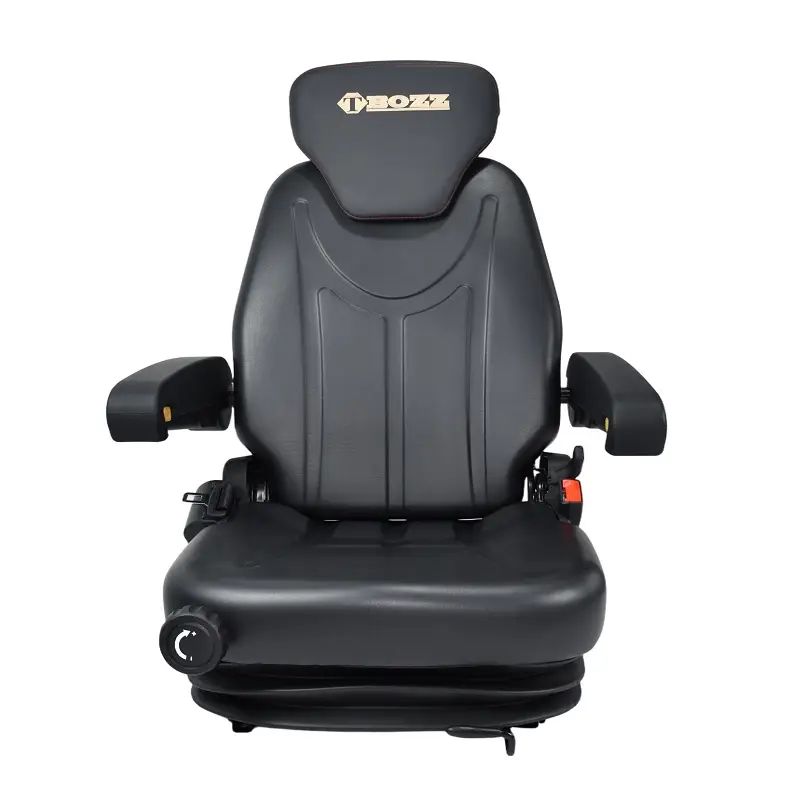
Durability requirements vary depending on the type of industrial vehicle. Forklifts require seats that withstand frequent entry and exit cycles, while construction machinery demands enhanced vibration resistance and structural reinforcement for long-hour operation. In this context, systems such as a universal industrial seat are designed to provide consistent durability across multiple machine categories without compromising performance. Similarly, a universal forklift seat must balance compact structural design with high-frequency usage durability requirements in warehouse environments.
Maintenance Strategy and Lifecycle Performance
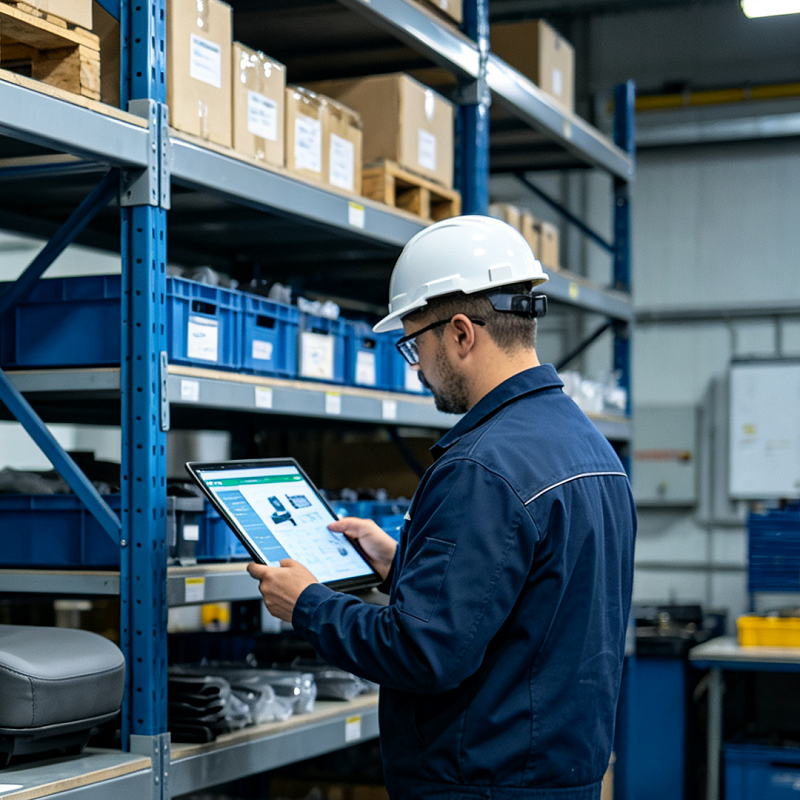
Maintenance is a key factor in determining long-term durability. Regular inspection of suspension components, foam condition, and structural joints helps prevent premature failure and ensures stable performance over time. Modular seat designs improve maintainability by allowing replacement of individual components rather than entire systems, thereby extending overall lifecycle efficiency. Lifecycle cost analysis is widely considered more important than initial procurement cost in industrial seat selection decisions.
Integrated Engineering Perspective on Durability
From an industry-wide perspective, durability is increasingly understood as an integrated engineering outcome rather than a single-material property. Structural design, material science, vibration control, and environmental protection must all function together to ensure long-term reliability. Manufacturers such as Source One operate within this integrated engineering framework, aligning structural reinforcement, material selection, and production consistency to support industrial applications requiring long service life and stable performance.
Conclusion: Key Criteria for Durability Evaluation
Evaluating the durability of industrial vehicle seats requires a comprehensive assessment of structural integrity, material fatigue resistance, suspension performance, environmental protection, and maintenance design. Each factor contributes to the overall lifespan and reliability of the seating system. Industry analysis shows that durable seating systems are essential for maintaining operator safety, reducing downtime, and ensuring consistent equipment performance in demanding environments. Ultimately, well-engineered industrial seats play a critical role in supporting long-term operational stability, while solutions such as a universal forklift seat demonstrate how standardized engineering approaches can still meet diverse industrial durability requirements across global applications.